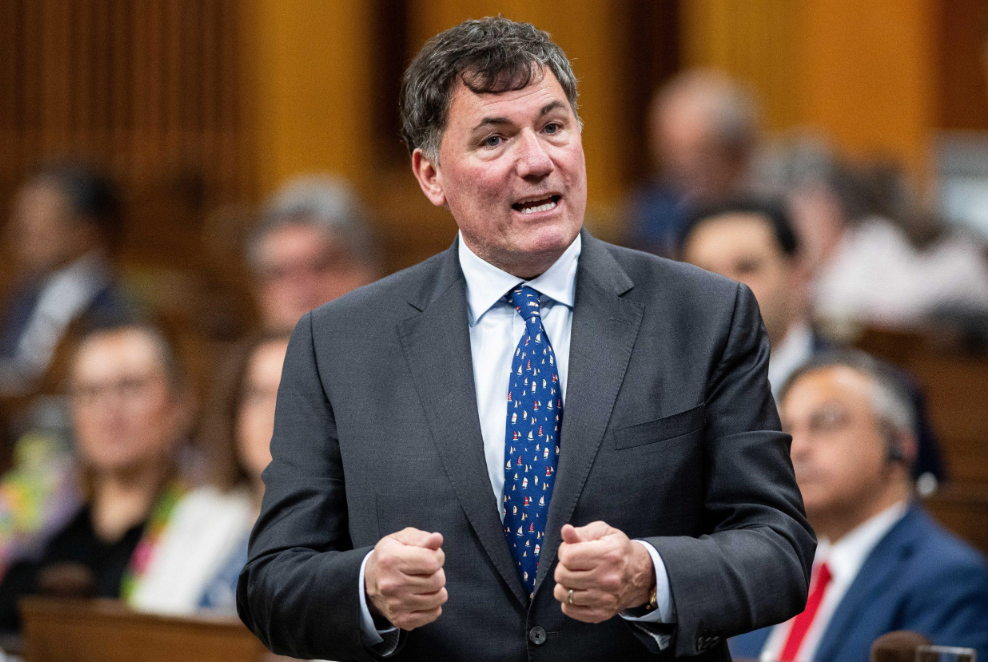
Dominic LeBlanc: A Career Defined by Continuity, Trust, and Institutional Leadership
Dominic LeBlanc has built one of the most consistent and enduring careers in modern Canadian politics, distinguished by long-term public service, strategic influence within government, and a reputation for reliability during periods of national complexity. Born on December 14, 1967, in Ottawa, Ontario, LeBlanc was raised in an environment deeply connected to Canadian political life. His father, Roméo LeBlanc, served as Governor General of Canada, exposing him early to the mechanisms of governance and diplomacy.
LeBlanc’s education reflects a strong academic foundation aligned with his future career. He studied political science at the University of Toronto before obtaining a law degree from the University of New Brunswick. These academic experiences equipped him with both theoretical understanding and practical legal insight, forming the basis for his approach to policymaking and governance.
His entry into federal politics came in 2000, when he was elected as the Member of Parliament for Beauséjour. Over the following decades, LeBlanc maintained his seat, demonstrating sustained electoral support and a strong connection with his constituency. Within the Liberal Party, he became known not as a highly visible populist figure, but as a dependable and strategic operator—someone entrusted with complex portfolios and sensitive political responsibilities.
Throughout his career, LeBlanc has held several critical cabinet positions. As Minister of Fisheries, Oceans and the Canadian Coast Guard, he navigated issues related to environmental sustainability, resource management, and coastal economies. Later, as Minister of Intergovernmental Affairs, he played a central role in managing relationships between the federal government and the provinces—an area often marked by political tension and negotiation.
His tenure as Minister of Public Safety further demonstrated his capacity to operate in high-stakes environments. In this role, LeBlanc dealt with issues ranging from national security to emergency response coordination, requiring both decisiveness and diplomatic sensitivity.
A defining aspect of LeBlanc’s career has been his close working relationship with Prime Minister Justin Trudeau. As a trusted ally, LeBlanc has been involved in key strategic decisions within the Liberal government, often operating behind the scenes to ensure policy alignment and execution.
In 2017, LeBlanc was diagnosed with cancer, temporarily stepping back from his duties. His return to public life after treatment reinforced his image as resilient and committed, further strengthening public and political trust.
Rather than pursuing a highly ideological path, LeBlanc’s legacy is rooted in governance itself—his ability to maintain stability, manage complexity, and contribute to the continuity of Canadian political institutions. His career reflects the importance of experience, discretion, and institutional knowledge in shaping national leadership.












Commento all'articolo